How to Choose the Right Leather Leash for Serious Working Dogs
Mar 18th 2026
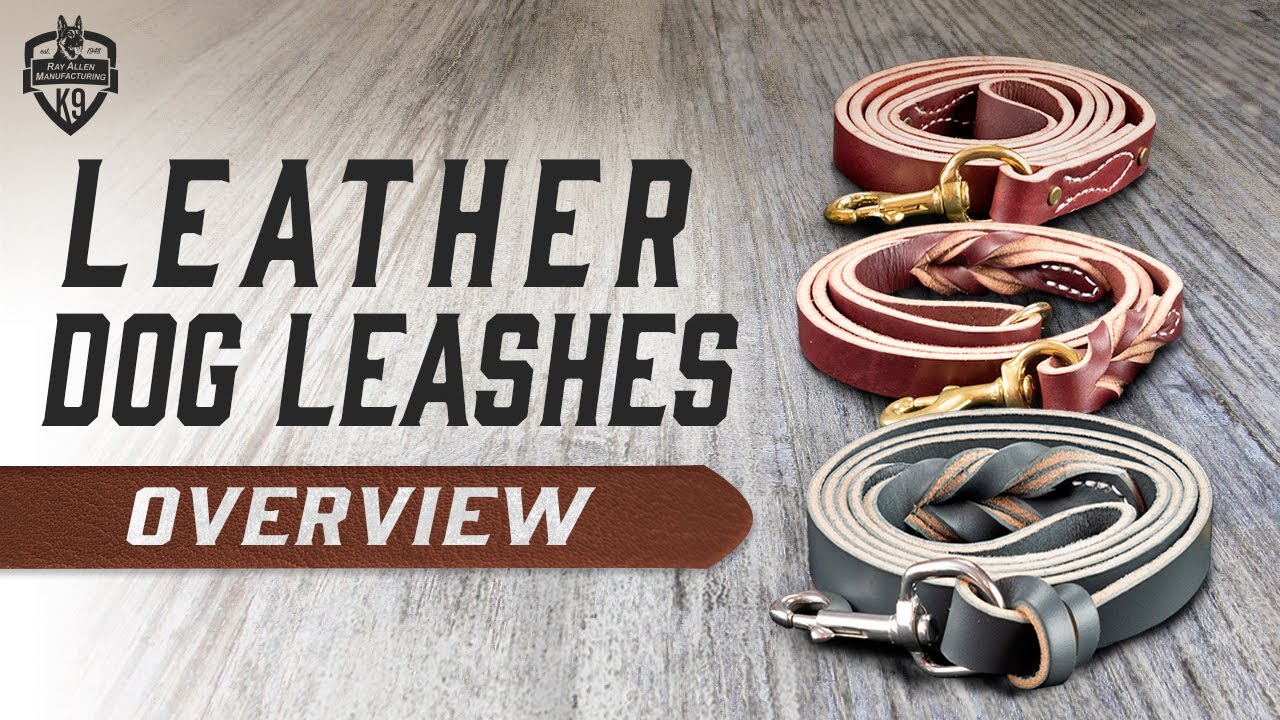
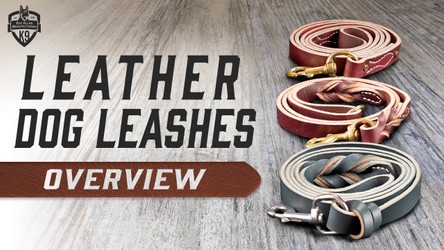
When a handler invests in a leather leash, it should feel like a lifetime tool, not a disposable accessory. We build our leather leashes for working dogs that see real use in the field, on the street, and on the training field, and there are real differences between leash styles that matter when handling high-drive K9s. This guide breaks down how our leather leashes are built, why they feel the way they do in the hand, and what handlers should look for when choosing the right leash for their dog and their job.
Thickness and Feel in the Hand
The first thing a handler notices about a quality leather leash is how it feels in the hand. Our heavy leather leashes are built from northern hides and typically measure just under a quarter inch thick. That gives a substantial, confident grip that fills the hand and really shines once the leather breaks in.
For handlers who want less bulk, or who have smaller hands, we also offer more refined options like 3/4" braided leashes. These are slimmer, easier to manipulate, and ideal when the handler does not need as much “meat” in the hand but still wants the control and responsiveness that quality leather provides.
How the Leash Is Finished: Braided, Knotted, or Riveted
The way a leash is finished at the snap and handle changes both strength and handling characteristics. We use three primary finishing methods, each with a specific purpose.
1. Twist-Braided (Hardware-Free at the End)
Twist-braided leashes are finished by braiding the leather without additional hardware at the end. There are no extra holes beyond the braid slits, and no metal securing the final connection. This keeps the leather continuous and clean, which many handlers prefer for simplicity and longevity.
2. Knot-Braided
Knot-braided leashes add a functional advantage at the snap end. The knot behind the snap acts as a natural stopping point for the hand. When a handler chokes up on the leash and grabs near the snap, their hand locks against the knot instead of sliding back, giving better traction and control on a strong dog.
This is especially useful in:
- Close quarters control
- Heeling work with high-drive dogs
- Situations where sudden line tension is likely
3. Rolled, Stitched, and Riveted
Some of our leashes feature a rolled or fishtail-style end that is stitched, or stitched and riveted. The classic fishtail design we have been making for decades is secured with rivets to keep the leather locked in place at both ends. The same construction can be seen in the handle.
These styles are ideal for handlers who want:
- A traditional look and feel
- Reinforced, proven construction
- A familiar working dog leash design that has stood the test of time
Rings in the Handle and Leash Management
Many of our leather leashes are available with a ring in the handle. This simple feature gives handlers several useful options:
- Clip the snap back to the ring to wear the leash around the waist.
- Sling it over a shoulder and secure it for hands-free carry.
- Quickly shorten or store the leash when the dog is off leash but the handler wants the leash on body.
We also size certain leashes specifically for waist wear, offering lengths that comfortably wrap and clip around the handler while still providing usable working length when deployed.
Hardware: Bronze vs Stainless and Realistic Load
We typically build leather leashes with either bronze snaps or stainless steel snaps. Each has its role:
- Bronze snaps: Classic look, strong, and suitable for most working applications. Manufacturer guidance puts the 1" version at roughly a 500 lb range.
- Stainless steel snaps: More resistant to rust and corrosion, especially in wet or saltwater environments, with approximate ratings around 600 lb for comparable sizes.
In practical working dog handling, the leash and snap are rarely the weak point. The handler’s grip usually fails before quality hardware does. Still, on serious working dogs, it makes sense to choose hardware that exceeds what the job requires, especially in harsh environments or high-force work.
Why Our Leather Feels Different: Northern Hides and U.S. Tanning
A major difference in our leather leashes is the source and tanning of the hides. We use northern hides, which come from cattle raised in colder climates. The colder winters help create a tighter grain and heavier hide. That tighter grain is what allows us to produce leashes that are nearly a quarter inch thick without splitting, cracking, or showing grain separation when folded.
Key points about our leather:
- Northern hides: tighter grain, heavier per square inch, stronger and more durable.
- When folded, you do not see grain splitting or cracking because the fiber structure is dense and uniform.
- All leather is tanned in the United States under strict environmental regulations, particularly around wastewater and chemical use.
We rely on U.S. veg-tanning processes, which use vegetable-based products rather than harsh chemicals. This is better for the environment and produces a strong, dense, work-ready leather that breaks in beautifully and lasts for years. It is not unusual for handlers to report using the same leather leash for decades when properly cared for.
Choosing the Right Leather Leash for Your K9
A good leather leash should be more than a line between handler and dog. It should support clear communication, reliable control, and long-term durability, especially with serious working dogs. That is why we obsess over hide selection, tanning, hardware, and finishing details. Handlers should focus on their dog, not worry about the leash.